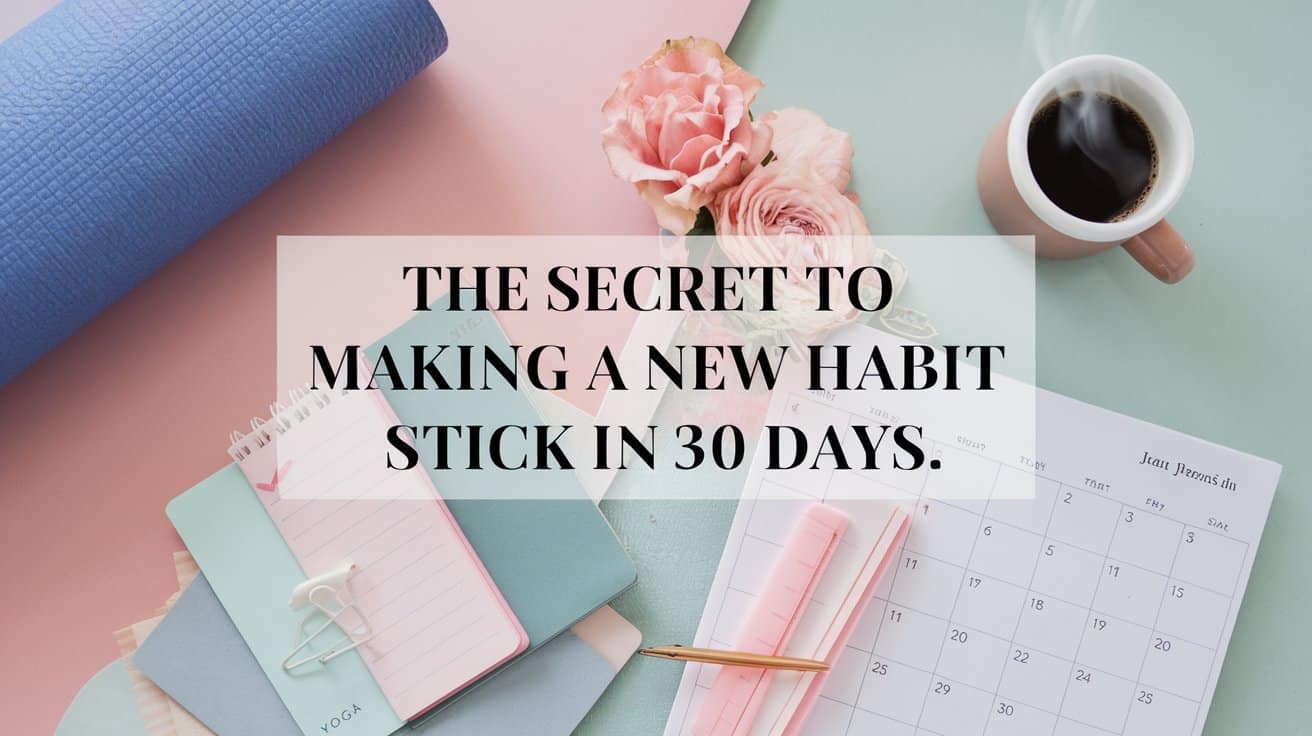
The Secret to Making a New Habit Stick in 30 Days
Ever wondered why some habits stick while others fade away within weeks? The key to lasting change isn’t just willpower—it’s strategy. Using the right approach, you can make any habit a natural part of your daily routine in 30 days. Let’s break down the steps to making your new habit stick.
1. Start Small and Build Up
Significant changes can feel overwhelming, so it’s better to start small. Instead of committing to an hour of exercise daily, begin with just 5–10 minutes. Small, manageable habits are easier to stick to and gradually build momentum over time.
Picture This: Imagine setting out a yoga mat in your living room and doing just one stretch. That’s it. No pressure, no overthinking. The next day, you add another movement. Within a week, you’re flowing through a 10-minute session effortlessly. By the end of the month, yoga is no longer a chore—it’s part of your daily rhythm.
How to Apply It:
- Choose a micro-version of your habit (e.g., five push-ups instead of a full workout).
- Gradually increase the intensity once it feels natural.
- Focus on consistency rather than perfection.
2. Tie Your New Habit to an Existing Routine
One of the best ways to solidify a habit is to anchor it to something you already do. This method, called “habit stacking,” makes new habits seamless rather than forced.
Picture This: You brush your teeth every morning without thinking. Now, imagine placing a water bottle next to your toothbrush. Each time you brush, you drink a full glass of water afterward. There is no extra effort—just a smooth transition into a healthier routine.
How to Apply It:
- Identify a habit you already do daily (e.g., making coffee, commuting, showering).
- Attach your new habit to it (e.g., stretching while your coffee brews).
- Make the transition as effortless as possible.
3. Track Your Progress and Stay Consistent
Tracking your habit helps reinforce commitment. Whether it’s a simple checklist, a habit-tracking app, or a physical journal, visually seeing your progress builds motivation.
Picture This: A calendar on your wall with bright checkmarks for each day you complete your habit. The first few marks are small victories, but by day 15, the streak is too satisfying to break. Before you know it, your habit has become second nature.
How to Apply It:
- Use a habit tracker, checklist, or app.
- Set small daily goals and celebrate milestones.
- Don’t break the chain—restart the next day if you miss a day.
4. Reward Yourself to Stay Motivated
Your brain loves rewards, and using them wisely can reinforce new habits. The trick is choosing small, meaningful rewards that motivate you without derailing progress.
Picture This: You finish your morning workout and immediately pour yourself a cup of your favorite coffee as a reward. The smell, warmth, and taste become a ritual you look forward to. Soon, your brain associates exercise with something positive, making it easier to stick with.
How to Apply It:
- Pair your habit with a simple reward (e.g., watching your favorite show after a workout).
- Keep rewards aligned with your goal (e.g., a healthy smoothie instead of junk food).
- Use intrinsic motivation—focus on how good progress feels.
5. Prepare for Setbacks and Keep Going
No habit journey is perfect. Life happens, and you might miss a day or two. The key is not letting a slip turn into a stop. Instead of feeling discouraged, remind yourself that consistency over time truly matters.
Picture This: You miss your workout one day. Instead of feeling guilty, you tell yourself, “It’s just a bump in the road.” The next day, you show up again—maybe for a shorter session, but you show up. The habit remains intact, and progress continues.
How to Apply It:
- Expect setbacks and plan how to recover.
- Avoid the “all-or-nothing” mindset—progress is more important than perfection.
- Keep going even if you miss a day; one misstep doesn’t erase your progress.
Final Thoughts: Make It a Lifestyle, Not a Chore
Making a habit stick in 30 days isn’t about perfection but persistence, strategy, and self-compassion. Start small, tie your habit to something familiar, track your progress, reward yourself, and bounce back from setbacks. Before you know it, your new habit won’t feel “new” anymore—it’ll just be part of who you are.
If you’re curious about the science behind habit formation and why consistency matters more than motivation, James Clear breaks it down perfectly here.
You Might Also Like: