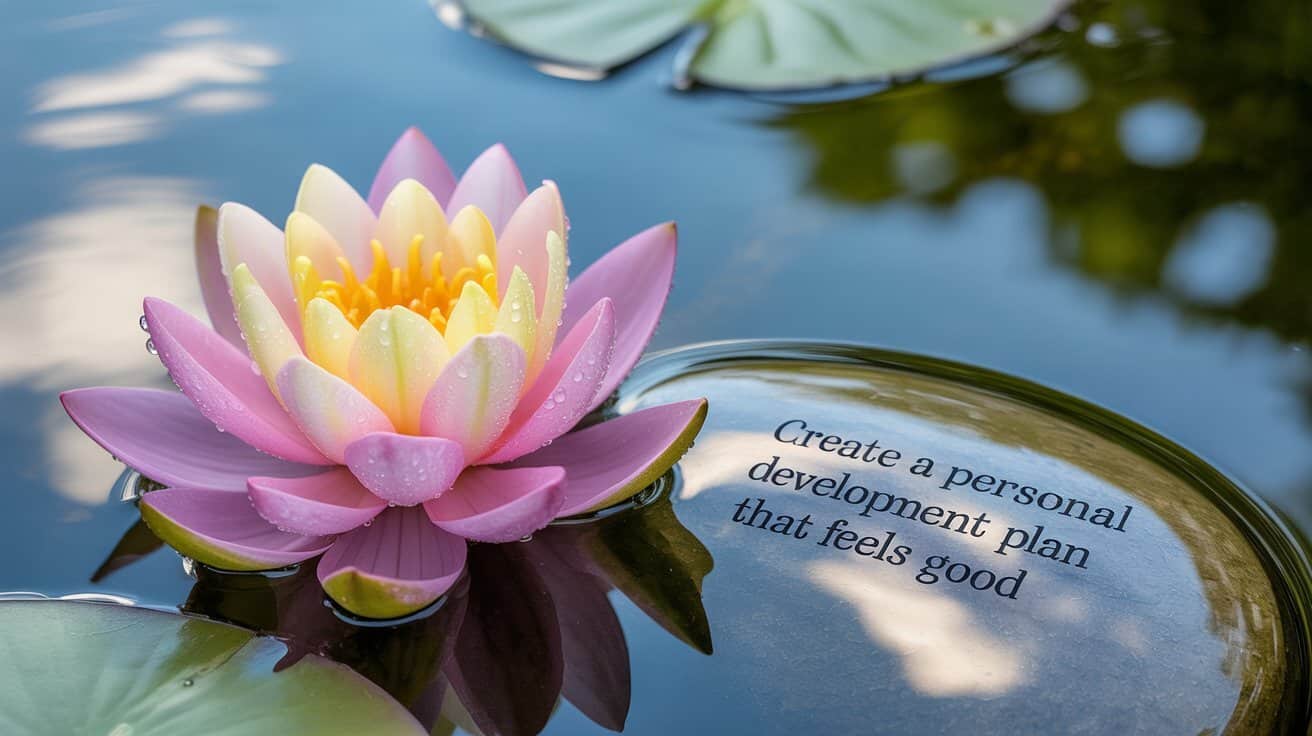
Create a Personal Development Plan That Feels Good
Most personal development plans feel like corporate worksheets or rigid self-improvement schedules—but growth shouldn’t be a punishment. A truly empowering plan supports your values, aligns with your energy, and gives you room to enjoy the process. In this post, we’ll create a personal development plan that feels good.
Step 1: Define What Growth Looks Like for You
Forget what everyone else is doing. Growth is deeply personal, and your plan should reflect your version of a fulfilling, successful life.
Picture This: You’re journaling at a sunny café table, latte in hand, mapping out a life you’re excited about—not one that looks good on Instagram.
How to Apply It:
- Ask yourself: What kind of person do I want to become?
- Identify 3-5 core values (e.g., creativity, freedom, stability).
- Imagine your ideal day or week and pull goals from there.
Step 2: Choose 3 Areas to Focus On
Trying to “fix everything” at once leads to burnout. Pick just a few key areas of life you’d like to nurture.
Picture This: Your planner has three categories: Health, Career, and Relationships. It’s neat, intentional, and not overwhelming.
How to Apply It:
- Use categories like wellness, career, finances, personal growth, and relationships.
- Choose the ones that feel most energizing, not the ones you think you “should” pick.
Step 3: Set Feel-Good Goals (Not Guilt-Goals)
Instead of setting punishing goals, focus on those that make you feel more alive, calm, or connected.
Picture This: Instead of writing, “wake up at 5 a.m. every day,” your goal is to “start mornings with 10 quiet minutes to myself.” It feels doable and kind.
How to Apply It:
- Use the SMART goal method, but with compassion.
- Ask: Will this goal improve my life or stress me out?
Step 4: Break It Down Into Monthly or Weekly Actions
Significant changes happen through small, consistent steps. Map out what gentle progress looks like over time.
Picture This: You spend 15 minutes checking in and planning tiny action steps each Sunday. You feel in control, not behind.
How to Apply It:
- Create 1-2 action steps per week per area.
- Use trackers or check-ins that feel rewarding, not rigid.
Step 5: Build in Rest, Rewards, and Flexibility
A personal development plan should make room for real life. If it doesn’t bend, it breaks.
Picture This: You skip your routine one day, and instead of spiraling, you take a walk, reflect, and pick up where you left off the next day.
How to Apply It:
- Schedule off days and self-care breaks.
- Celebrate progress weekly (journaling, treats, or tiny rituals).
- Adjust your plan when needed—guilt-free.
Step 6: Track Progress in a Way That Feels Fun
Trackers don’t have to be boring. Use creative tools that make you smile when you check-in.
Picture This: A colorful habit tracker or personal dashboard that reflects your goals and sparks joy each time you use it.
How to Apply It:
- Use apps, bullet journals, or sticky notes—whatever fits your style.
- Include photos, playlists, or affirmations.
Step 7: Check in With Yourself Monthly
Your goals may shift, and that’s okay. Make time to reflect, tweak, or discard your plan’s parts.
Picture This: You light a candle, open your journal, and reflect on what’s working and what’s not. It feels like a ritual, not a chore.
How to Apply It:
- Use end-of-month review prompts: What felt good? What didn’t? What needs changing?
- Stay curious instead of critical.
Final Thoughts: Growth Doesn’t Have to Feel Like a Grind
Creating a personal development plan that feels good is about honoring your pace, your needs, and your joy. Choose goals that nourish you. Pick actions that energize you. Track your progress in a way that celebrates your effort.
Because growth isn’t a race—it’s a relationship with yourself.
Would you like a free printable to help design your plan? Let me know!
You Might Also Like: