How to Create a Self-Care Toolkit (What to Include + Why It Works)
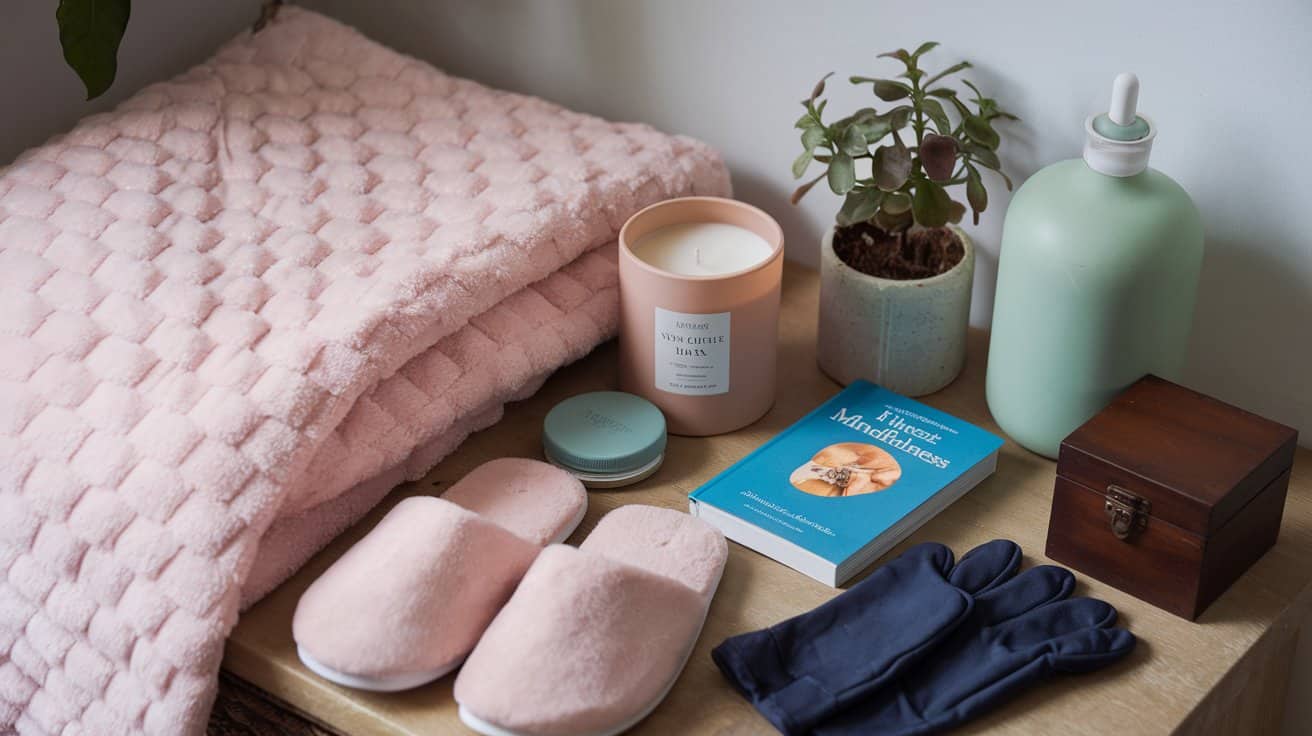
When life gets overwhelming, a self-care toolkit can be your anchor. Understanding how to create a self-care toolkit is crucial for gathering a curated collection of physical, emotional, and practical things that help you stay grounded, soothed, and supported. In this guide, we’ll show you how to build your toolkit and why each element can make a meaningful difference in your day-to-day life.
This website contains affiliate links. As an Amazon Associate, I earn from qualifying purchases. If you click on an affiliate link and make a purchase, I may receive a commission at no additional cost. Additionally, some content on this site has been created with AI assistance.
1. Comfort Item
Your self-care toolkit should include at least one object that brings you physical comfort and relaxation. This could be a soft blanket, cozy socks, or a favorite hoodie.
Try This: Weighted Blanket | Cozy Socks | Fleece Hoodie
Picture This:
You’re wrapped in your favorite throw, tucked into the corner of your couch. Everything outside can wait. This is your space.
Why It Works:
Physical comfort has a direct effect on calming your nervous system. It tells your brain, “You’re safe.”
2. Soothing Scent
A calming scent can immediately shift your mood. Essential oils like lavender, eucalyptus, or vanilla are potent triggers for relaxation.
Try This: Lavender Essential Oil | Oil Diffuser
Picture This:
You open a small bottle and inhale deeply. The scent wraps around you like a gentle breeze, and you breathe slower, deeper.
Why It Works:
Aromatherapy taps into the limbic system, the part of the brain that controls emotions, helping you calm down quickly.
3. Uplifting Playlist
Music can be one of the fastest ways to elevate your mood. Include a playlist that brings joy, calm, or motivation.
Try This: Amazon Music
Picture This:
Your favorite song starts. You nod your head. Maybe even smile. Suddenly, everything feels more manageable.
Why It Works:
Music influences brain chemistry and releases feel-good hormones like dopamine.
4. Favorite Book or Journal
Have reading or writing material close by, whether it’s a comforting novel, an inspiring memoir, or a blank journal.
Try This: Gratitude Journal | Inspirational Books
Picture This:
You can curl up with a book that feels like an old friend or let your thoughts spill onto paper, unfiltered and healing.
Why It Works:
Reading and journaling are proven to reduce stress and improve emotional clarity.
5. Nourishing Snack or Drink
Keep something small and satisfying on hand—like herbal tea, dark chocolate, or trail mix.
Try This: Chamomile Tea | Dark Chocolate Snacks
Picture This:
You sip warm chamomile tea, the steam rising gently in the room’s quiet. You feel held.
Why It Works:
Mindful eating or drinking can help bring you into the present and offer sensory comfort.
6. Affirmation or Encouraging Note
Write a positive note or choose an affirmation card that reminds you of your strength.
Try This: Affirmation Cards | Motivational Sticky Notes
Picture This:
You pull out a small card that says, “You’ve survived 100% of your hardest days.” And you believe it.
Why It Works:
Positive affirmations can rewire negative thinking and build resilience over time.
7. Grounding Tool
To help you stay present, include something tactile, such as a smooth stone, fidget toy, or stress ball.
Try This: Worry Stones | Fidget Rings | Stress Balls
Picture This:
You roll a cool stone between your palms. The sensation brings you out of your head and into the now.
Why It Works:
Grounding tools engage your senses, reducing anxiety and dissociation.
8. Emergency Contacts List
Keep a printed list of people you trust—friends, family, or therapists—who can support you when things get tough.
Picture This:
You glance at the list and remember that you’re not alone. Help is just one message or call away.
Why It Works:
Support within reach lowers emotional overwhelm and reminds you that connection is always available.
9. Guided Meditation or Breathing App
A pre-downloaded meditation or breathwork session can help you reset quickly.
Try This: Meditation Apps or Guided Audio
Picture This:
Eyes closed. A calming voice guides your breath. You feel your heart rate slow. The storm starts to pass.
Why It Works:
Meditation and deep breathing activate your parasympathetic nervous system—your body’s natural chill mode.
10. Visual Inspiration
Add a photo, art print, or vision board that connects you to joy or your goals.
Try This: Vision Board Kit | Inspirational Wall Art
Picture This:
You glance at a photo of your happy place. The colors, the smiles—it all brings back something good.
Why It Works:
Visual cues tap into your emotional memory, grounding you in positivity and purpose.
Final Thoughts: Build It, Use It, Trust It
Your self-care toolkit doesn’t have to be perfect or complete from the start. Begin with a few resonating items, and add more as you grow. Please keep it in a convenient location, such as a drawer, box, or digital folder.
The most important part? Use it. Reach for it without guilt. Trust that these small acts of care are mighty—and you’re worthy of everyone.
You Might Also Like: